
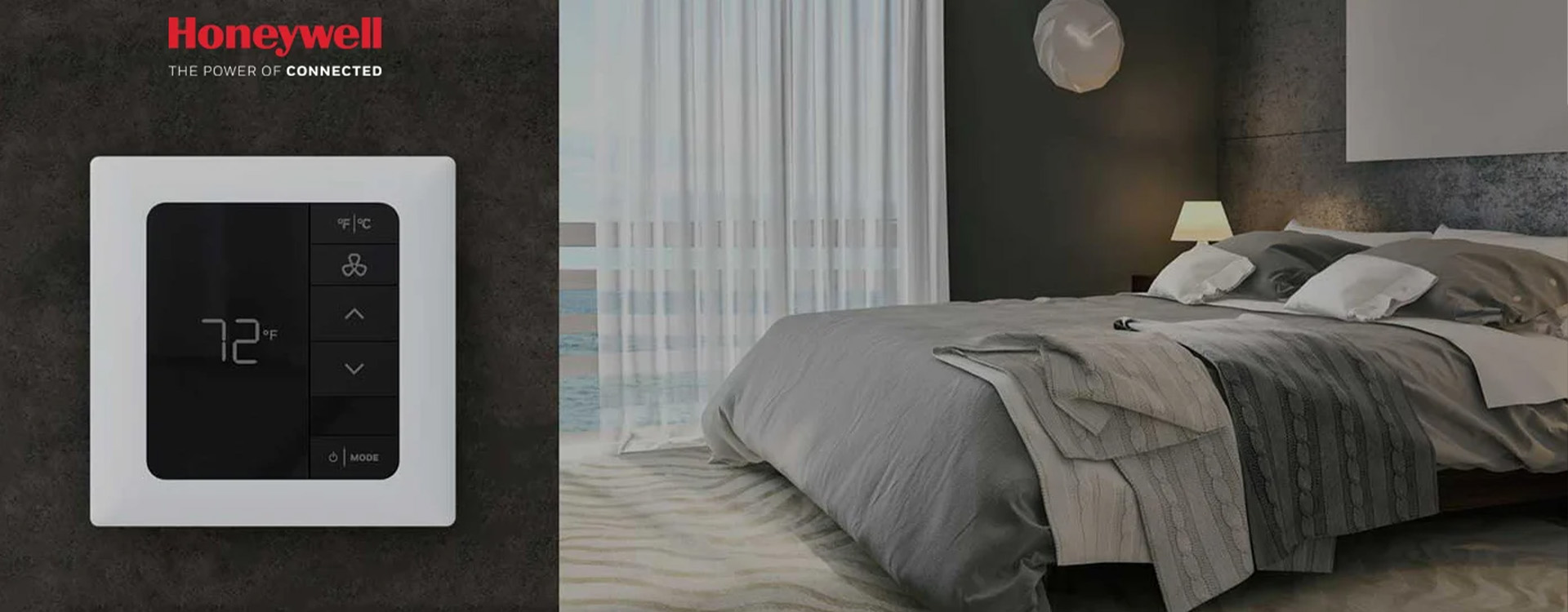
Hospitality buyer guide
Choosing a guest room management system (GRMS) supplier for an operating resort is a delivery and operations decision as much as a technology choice. The shortlist should show how each team will work with the building you have, the systems already in place and the narrow maintenance windows between guest stays. It should also explain who can help when a room automation fault appears during the busiest weeks of the year.
Start with the operating brief
Before asking suppliers for a proposal, agree what the resort wants to improve and what cannot be disrupted. List the room types, room count, occupancy pattern, renovation phases and planned opening dates. Identify which rooms can be taken out of service together and whether engineering teams can access ceilings, risers and distribution boards while guests are staying elsewhere in the building.
Write down the guest and staff outcomes in plain language: comfortable arrival, simple bedside lighting control, appropriate temperature setbacks in unoccupied rooms, clear room status for engineering and a system staff can operate after the project team leaves. Keep required functions separate from optional features. That lets the owner compare a complete base scope before considering extras.
Gather current drawings, controller schedules, panel photographs, HVAC equipment details and interface documents. Record what is known and label what still needs a survey. An experienced supplier should turn gaps into explicit survey questions rather than quietly assuming that existing wiring, network capacity or equipment can be reused.
Can the retrofit avoid rewiring every room?
The answer depends on the installed cabling, the room layout, the condition of the electrical infrastructure and the functions the resort expects. A wireless design may reduce new cable routes in finished rooms, but it still needs suitable device locations, reliable radio coverage, a plan for batteries where applicable and gateways with dependable power and network connections. Wireless does not remove the need for room-by-room commissioning.
A wired design can provide predictable connections and may suit rooms where conduits or accessible ceilings already exist. It can also require more opening-up work when cable routes are hidden behind finished walls and joinery. A hybrid approach may fit a phased renovation: reuse suitable wiring for fixed equipment and use wireless links where new cable routes would cause disproportionate disruption.
Ask each bidder to mark the proposed approach on a sample room drawing. The plan should identify the room controller, sensors, guest controls, gateways, cable routes, power sources and any equipment that must be replaced. Require the supplier to state which existing elements are being reused, what has to be opened or drilled, and what assumptions could change the price or programme. Ask for a pilot room before committing to every room type.
Check every integration on the existing system
A GRMS is only useful when its interfaces work with the resort's installed equipment. Do not accept a general statement that a system is “compatible.” Ask the supplier to identify the exact interface method, required hardware, software version, licence and responsibility on both sides of each connection.
- Door locks: confirm the installed lock family, whether it can share door or key events, and whether any gateway or lock-system configuration is required. Our hotel door lock integration guide lists the decisions to settle before procurement.
- Property management system: define which reservation and room-status events should reach the GRMS, how those messages are tested and who provides access to the PMS interface.
- HVAC: inventory the room fan coils, thermostats, valves and control interfaces. Agree which set points and operating states the GRMS can read or command, and how a room behaves if a connection is lost.
- Lighting: list the circuits, dimming method, scenes, panels and any separate lighting controls. Decide whether the retrofit brings lighting into the room system or leaves existing controls in place. See our hotel lighting control guide.
For every interface, include a named counterpart, a test method and an acceptance result. “Integration included” is not a test plan. If an existing system cannot provide a required signal, the proposal should explain the limitation and present a practical alternative for the owner to assess.
Plan around July and August operations
Resort access is hardest to arrange when occupancy is highest. Ask how the supplier will phase work around room turnover, housekeeping schedules, quiet hours and guest privacy. The programme should include a sample room, mock-up approval, room blocks, daily reinstatement checks and a clear process for handing rooms back to front office.
Ask who will receive a service call during the peak season, where that person is based, how the issue will be triaged and what information the hotel must provide. Clarify whether remote monitoring is part of the proposed scope, what it can show, who watches it and how the hotel is notified. Remote access should follow the resort's security and approval procedures. Do not treat monitoring as a substitute for an agreed field-service arrangement.
Get the support arrangements in writing. Ask about the normal contact route, working hours, escalation contacts, spare parts held in Turkey and the process for arranging an on-site visit. If a supplier proposes a response target, define when the clock starts, which issues it covers, site access assumptions and any exclusions. The proposal should distinguish commitments from best-effort guidance so the operator can plan cover accurately.
Compare evidence from similar hotel work
Ask for references that resemble the project in the ways that matter: an operating hotel, a phased refurbishment, a comparable room count, similar HVAC and lighting, or a short seasonal work window. A large new-build project can show delivery capability but may not answer how a team handles guest-room access and staged commissioning in an open resort.
Request permission to speak with the hotel's engineering or operations lead. Useful questions include: Were rooms returned on schedule? Could the hotel team understand the controls after handover? Were interface responsibilities clear? How were faults handled during occupancy? Were as-built drawings, device schedules and passwords delivered in a usable form?
Titan BT is one option for owners to evaluate. Its published reference footprint lists 47 hotel projects across 11 countries, and its locations data lists an Ankara–Istanbul office. Published project records include Les Temps Istanbul Karakoy, Curio Collection by Hilton, Grand Sapphire and Swissôtel Turgutreis Bodrum. These records are a starting point for due diligence, not a substitute for confirming comparable retrofit experience, present-day availability and the scope relevant to your resort.
Review the reference directory and the hospitality GRMS service page, then ask any shortlisted supplier for project-specific contacts and evidence. Compare the evidence in the same format for every bidder.
Make commissioning and handover part of the price
A successful installation is not complete when devices are fitted. The contract should state how each room type will be configured, tested and accepted. Create a room test sheet that covers guest controls, lighting scenes, HVAC commands and feedback, occupancy logic, door events where included, reservation status where integrated, alarms and fault recovery.
Test representative rooms before rolling out a configuration, then complete a documented check in every room. The resort should see the planned test cases, the expected result, the actual result, any outstanding issue and the person responsible for closing it. Interfaces should be tested with the PMS, lock, HVAC or lighting counterpart present where necessary.
Handover should include final drawings, device and room schedules, configuration backups, interface descriptions, credentials transferred through an approved secure process, warranty details, spare-part references and a fault-finding guide. Train both engineering and front-office staff on the tasks they actually need to perform. Confirm who owns configuration changes after the project and how future room renovations will be documented.
Questions to ask every GRMS supplier
- Which parts of the current installation can be reused, and what evidence will confirm that before the final price?
- What is wired, what is wireless, and how will coverage and reliability be checked in a sample room?
- Which exact lock, PMS, HVAC and lighting interfaces are included, and who supplies and tests each side?
- How will work be phased while the resort remains open, and how are rooms checked before they return to service?
- Who handles a July or August fault, what remote monitoring is included, and what local spare parts are available?
- Which comparable hotel references can the owner contact about delivery and post-handover support?
- What commissioning records, drawings, training and configuration backups are included at handover?
- What assumptions, exclusions and owner-provided resources could affect price, access or schedule?
Build a shortlist the resort can operate with
Score proposals against the same categories: disruption and reuse, integration detail, seasonal work plan, local engineering access, relevant references, commissioning and whole-life support. Keep price visible, but evaluate it beside the risk of room closures, unclear interfaces and incomplete handover. Ask for revisions where bidders have made different assumptions, then compare like with like.
The best fit is the supplier that can explain the proposed system in terms the resort team can verify: what will change in each room, how it connects to existing equipment, who is responsible when a dependency fails and what the hotel receives at handover. That level of clarity helps owners plan a retrofit that serves guests through the season and gives engineering a system it can maintain after opening.
To discuss a resort project, contact Titan BT through its hospitality systems team with the room count, location, existing equipment and preferred renovation window.